How to apply for your Chase Freedom Rise Card
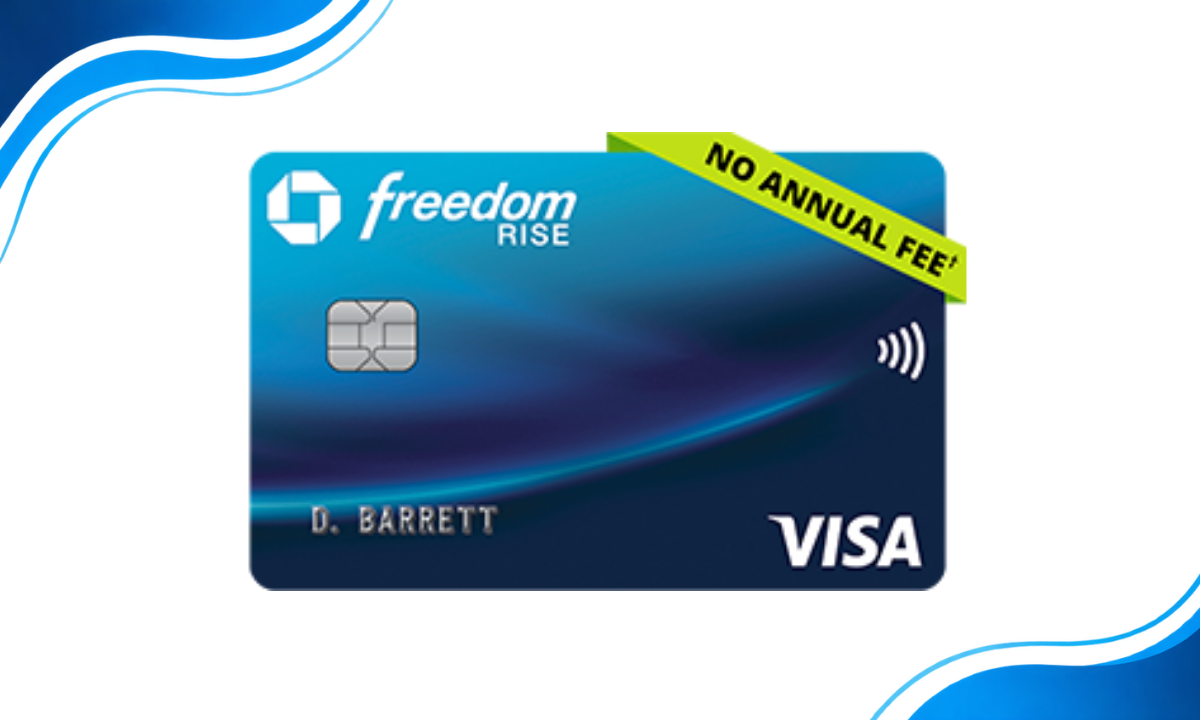
The Chase Freedom Rise℠ Credit Card is designed for consumers who are at the beginning of their credit journey and want a practical way to build credit history with a major U.S. bank. In a market where many entry-level cards either offer limited perks or require a security deposit, this product stands out for pairing credit-building potential with straightforward rewards. It is especially relevant for first-time cardholders, students, and people with little or no previous credit experience.
What makes the card notable is its simple proposition: it offers unlimited 1.5% cash back on all purchases and charges a $0 annual fee, while payment activity can help establish a positive record with the major credit bureaus when the account is used responsibly. Because it comes from Chase, applicants also gain access to a mature digital banking ecosystem, fraud protections, and tools such as Credit Journey®. For those researching the Chase Freedom Rise credit card or comparing the best credit card for no credit history, this card may serve as an accessible starting point rather than a long-term premium product.
Chase Freedom Rise℠ Credit Card: a beginner-friendly option from Chase in the United States
The main strength of the Chase Freedom Rise is that it combines accessibility with rewards in a way that many starter cards do not. Cardholders earn 1.5% cash back on every eligible purchase, which means there is no need to track rotating categories or spending caps for base rewards. The card also has no annual fee, an important benefit for users who are trying to build credit without adding recurring fixed costs.
Another advantage is that the card does not require a security deposit, unlike many products aimed at beginners. Chase also highlights a potential path to growth through automatic account reviews for credit line increases, which may help improve credit utilization over time if the account is managed carefully. Additional value comes from the $25 statement credit available after setting up automatic payments in the first 3 months and remaining enrolled for at least 90 consecutive days, plus digital account management, contactless functionality, Zero Liability Protection, and selected partner benefits such as Lyft and DoorDash offers, subject to terms.
Detailed card benefits
- Unlimited 1.5% cash back: a flat-rate structure that is easy to understand and useful for everyday purchases.
- $0 annual fee: the card can be kept open for years without a yearly maintenance charge, which may support credit history length.
- $25 automatic payment statement credit: available when auto pay is set up within the first 3 months and maintained for at least 90 days.
- Potential credit line growth: Chase may review eligible accounts automatically for increases.
- Zero Liability Protection: unauthorized charges can be addressed if reported promptly.
- Digital tools: access to Chase Credit Journey®, account alerts, online servicing, and the Chase Mobile® app.
- Partner perks: qualifying Lyft purchases earn 2% total cash back through 09/30/2027, and eligible DoorDash users may receive DashPass-related benefits and quarterly savings on non-restaurant orders.
- Flexible redemption: rewards may be redeemable for cash, gift cards, travel, and other options through the Chase rewards ecosystem, though values can vary by redemption method.
Requirements
Applicants generally must meet the basic legal and identity requirements established by Chase and U.S. banking regulations. According to the issuer’s terms, a person must be at least 18 years old to apply in most states, 19 in Alabama and Nebraska, and 21 in Puerto Rico. A valid permanent home address in the United States, the District of Columbia, Guam, Puerto Rico, the U.S. Virgin Islands, or a U.S. military address is typically required. Applicants should also be prepared to provide identifying information such as full name, residential address, date of birth, Social Security number, and government-issued identification under USA PATRIOT Act rules.
Chase will review credit, income, and other financial information before approving an application. An existing credit history is not strictly required, which is why the card is marketed toward beginners. In addition, Chase states that applicants who have never had a credit card may improve their likelihood of approval by holding eligible Chase checking or savings accounts with a combined available balance of at least $250. This is not a guarantee of approval, but it can be relevant for existing Chase customers.
About the Bank
Chase is part of JPMorgan Chase & Co., one of the largest and most established financial institutions in the United States and the world. Its roots trace back more than two centuries through predecessor banks that helped shape American commercial and consumer banking. Today, Chase operates as a full-service bank with a broad national presence, serving millions of customers through branches, ATMs, online banking, and mobile services.
This scale matters for cardholders. Rather than offering only a standalone card, Chase provides an ecosystem that includes checking accounts, savings accounts, mortgages, auto loans, small-business services, and investment products. For someone opening a first credit card, that infrastructure can feel reassuring because it combines a recognizable brand, extensive service channels, and advanced digital tools. Chase is also one of the largest credit card issuers in the United States, with products ranging from entry-level cards such as the Chase Freedom Rise℠ Credit Card to premium travel cards. That breadth may benefit customers who want to begin with a starter card and potentially move into a more advanced product later, depending on how their financial profile evolves.
Who Is This Card For?
The Chase Freedom Rise credit card is primarily for people who need a first or early-stage credit card and prefer a mainstream bank rather than a niche issuer. It may fit students, young adults, recent immigrants with limited U.S. credit history, and consumers rebuilding credit habits, provided they meet Chase’s underwriting criteria. The ideal cardholder is someone who wants a product that is easy to understand, carries no annual fee, and offers a modest rewards structure while helping establish a payment record.
It is less suited to people seeking premium travel perks, elevated category bonuses, or a low-interest long-term financing tool. Its value lies in its simplicity. A user who plans to make small to moderate purchases, keep balances low, pay on time, and build a relationship with Chase may find the card particularly relevant. Existing Chase deposit customers may also see added appeal because of the issuer’s note that qualifying balances in Chase checking or savings accounts can improve approval odds for applicants with no prior credit card history.
Rewards program, cash back and initial credit limit
The rewards structure is one of the easiest parts of the card to understand. Cardholders earn 1.5% cash back on all eligible purchases, and Chase tracks those rewards as points, where each $1 in cash back equals 100 points. Because rewards do not expire while the account remains open and in good standing, the program can be convenient for beginners who do not want to manage rotating calendars or category activation. Redemption options may include cash, gift cards, travel, and pay-with-points choices, although values can differ depending on how points are used. For example, Chase indicates that using points with Amazon Shop with Points provides a lower per-point value than standard cash back redemption.
Additional benefits may increase value for selected users. Eligible Lyft purchases earn 2% total cash back through 09/30/2027. Eligible cardmembers can also access 6 months of complimentary DashPass if activated within the promotional window, followed by automatic renewal at the prevailing rate unless canceled, plus up to $10 off quarterly on one qualifying DoorDash non-restaurant order while enrolled. These are useful but conditional perks and should be treated as secondary to the card’s core credit-building purpose.
Regarding the initial credit limit, Chase does not publicly promise a specific limit for every Freedom Rise approval on the product page. However, the pricing terms indicate that if approved for a Platinum account, the credit limit will be at least $500, while a Signature account would carry a minimum of $5,000. Since this is a starter-oriented product, many new users should approach it assuming a modest opening limit. In practical terms, the minimum credit limit may start at $500, while the maximum credit limit is not publicly disclosed and depends on underwriting, income, credit profile, and account review over time.
Step-by-Step Guide to Apply
Applying for the card is relatively straightforward, but it helps to prepare in advance. A typical process may look like this:
- Check the official page: visit the application page at freedom.
- Review the offer details and pricing terms: confirm the current APR, fees, rewards, and promotional conditions before submitting an application.
- Gather required information: have your full legal name, address, Social Security number, date of birth, employment details, and income information ready.
- Consider your Chase relationship: if you have never had a credit card, having eligible Chase checking or savings balances of at least $250 may improve approval odds, though it does not guarantee approval.
- Complete the online form: enter your personal and financial information carefully and review everything before submitting.
- Wait for a decision: some applicants may receive an instant response, while others may see pending status if Chase needs more time or is waiting to verify qualifying funds.
- Receive and activate the card: once approved and the card arrives, activation can be completed online, through the mobile app, or by using the instructions provided with the card.
For digital account access, the Chase Mobile® app can be downloaded here:
Pros and Cons of the Card
From a positive perspective, the card addresses a real gap in the U.S. market: it gives newer borrowers a chance to build credit with a large issuer without providing a security deposit. That alone makes it more attractive than many secured cards for consumers who qualify. The rewards structure is also clean and predictable, with 1.5% cash back on all purchases, and the absence of an annual fee lowers the cost of keeping the account open over time. Added benefits such as the auto-pay statement credit, app access, account alerts, and fraud protections also make the experience feel more complete than many basic starter cards.
Still, the card has limitations. The most important drawback is the APR, which is high relative to many mainstream credit cards, making it unsuitable for carrying a balance. The partner benefits, while helpful, are somewhat narrow and dependent on specific services such as Lyft or DoorDash. There is also a 3% foreign transaction fee, so the card is less appealing for international travel or purchases in foreign currency. Finally, while the card can be accessible, approval is never guaranteed; even with the Chase deposit-account consideration, applicants remain subject to credit review. In short, the product is strongest as a credit-building and everyday cash back tool, not as a low-interest or premium-rewards card.
How to Activate the Card?
After approval, the activation process is generally simple. Once the physical card arrives, the cardholder can follow the instructions included in the welcome materials or sign in to a Chase online account to complete activation. Many users may prefer to activate through the Chase Mobile® app, which also allows them to set up alerts, review transactions, enroll in automatic payments, and monitor rewards. Another option may be calling the activation number shown on the sticker attached to the card or in the accompanying documentation. Before using the card, it is wise to create online access, verify contact details, and set up automatic payments if pursuing the $25 statement credit offer.
Fees and Charges
The cost structure is one of the most important parts of evaluating the Chase Freedom Rise℠ Credit Card. The card has a $0 annual fee, which is a strong advantage for beginners. However, the ongoing APRs are high: the purchase APR is 25.49% variable, the balance transfer APR is 25.49% variable, and the cash advance APR is 28.74% variable. A penalty APR up to 29.99% may apply if a minimum payment is missed or a payment is returned unpaid, and it could remain in effect indefinitely.
Additional charges include late payment fees up to $40, returned payment fees up to $40, cash advance fees of either $10 or 5% of the amount, and balance transfer fees of either $5 or 5% of the transfer amount, whichever is greater. Foreign transactions cost 3% of each transaction in U.S. dollars. These terms underline an important point: this card is best used by paying the statement balance in full whenever possible.
Customer Service
Chase provides several official service channels for customers and applicants in the United States. General banking and card support can also be accessed through chase.com and through secure messaging or chat after logging in.
For Military Lending Act information, Chase lists 1-800-235-9978. For privacy-related affiliate information sharing preferences, the disclosed number is 1-888-868-8618. Existing cardholders should also use the Cardmember Services number printed on the back of the card or on the billing statement for account-specific assistance, fraud reporting, and urgent servicing needs.
About the author

Alex is a content writer focused on credit cards, personal loans, and everyday financial decisions. He enjoys turning complex financial topics into clear, practical information that helps readers understand their options and make informed choices.